
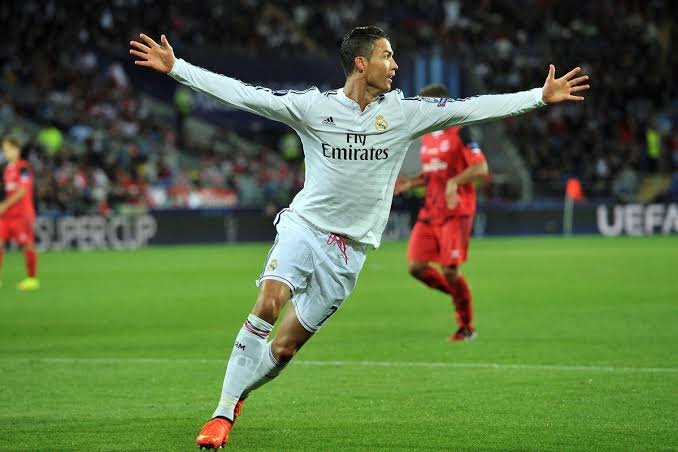
The battle for UEFA Champions League qualification during the 2014/2015 La Liga season offered a masterclass in high-stakes tactical football. While Barcelona and Real Madrid operated in their own stratosphere at the apex of the table, the fight for the remaining top-four positions saw Atlético Madrid, Valencia, and Sevilla locked in a ruthless war of attrition. For sports investors analyzing the Over/Under goal markets, these specific head-to-head encounters presented highly defined behavioral patterns. The immense psychological weight of Champions League qualification—worth tens of millions of euros in television rights and prestige—forced managers into extreme tactical adaptations that either entirely locked down or completely broke open the match state, moving totals lines far away from seasonal averages.
Why Did High-Stakes Qualification Deciders Evade Standard Goal Averages?
Standard forecasting models often fall short when applied to late-season deciders because they rely heavily on accumulated seasonal data rather than the immediate context of the fixture. In the 2014/2015 campaign, teams like Valencia and Sevilla regularly posted high-scoring numbers against lower-tier opposition by exposing structural talent gaps. However, when these direct competitors clashed with each other, the strategic landscape altered completely, stripping away the baseline predictability that bookmakers relied upon to set the standard 2.5-goal line.
The extreme value of a top-four finish transformed these matches into pseudo-cup finals where the fear of conceding heavily outweighed the incentive to attack early. Managers minimized risks by retreating into highly disciplined defensive structures, lowering their defensive blocks, and instructing full-backs to abandon their standard overlapping runs. This tactical shift directly suppressed early match volume, turning games that looked like high-scoring affairs on paper into low-tempo battles where a single goal frequently decided the entire outcome.
Tactical Conservation and the Surge of Second-Half Goals
The strategic aversion to risk during the opening periods of these qualification deciders created a distinct statistical skew between the first and second halves. Teams deliberately prioritized shape integrity and territorial containment from the opening whistle, seeking to evaluate the opponent’s pressing triggers without exposing their own backline. This calculated approach resulted in a high density of goalless opening halves across these critical head-to-head fixtures.
The structural breakdown of this tactical timeline reveals a mechanical shift as the clock advanced past the hour mark. To understand how these tense stale-mates transformed into volatile betting landscapes, it is useful to trace the exact progression of events that occurred as physical exhaustion set in.
1.First-Half Positional Gridlock:Minutes 1 to 45.
Both sides maintain rigid defensive lines, prioritizing low-risk sideways passing and absolute structural discipline. Midfielders avoid progressive runs into the box, resulting in low shot volumes and minimal space between lines.
2.Accumulated Fatigue Accumulation:Minutes 46 to 65.
The intense physical exertion of maintaining a continuous lateral defensive shift begins to take a toll on the central pivots. Small spatial gaps appear in the half-spaces as tracking speeds marginally slow down.
3.Desperation Adjustments and Tactical Expansion:Minutes 66 to 90.
The trailing team or the side needing a victory to secure their table positioning is forced to transition into an aggressive attacking posture. Substitutes add fresh legs, spaces widen significantly across the pitch, and the game transforms into a chaotic, high-velocity exchange.
Analyzing this specific breakdown reveals why late-game totals lines frequently offering immense value for in-play investors. As the tactical discipline of the first half dissolved under the weight of physical exhaustion and desperation, the probability of goals escalated exponentially, subverting the low-scoring trend established before the interval.
Direct Head-to-Head Goal Trajectories of the Top-Four Contenders
The specific matches involving Atlético Madrid, Valencia, and Sevilla during the 2014/2015 season provided clear evidence of how tactical intent shaped total goal outcomes. Atlético Madrid under Diego Simeone acted as the ultimate defensive baseline, using their legendary low block to systematically suffocate the fluid transitions of both Valencia and Sevilla.
To provide clear empirical context on how these specific matchups deviated from standard expectations, the following data matrix outlines the structural profiles of these direct encounters.
| Fixture Matchup | Dominant Tactical Theme | Core Market Trend | Primary Goal Factor |
| Atlético Madrid vs. Valencia | Midfield compression and set-piece prioritization | Strongly favored the Under line | Extreme physical challenges in the middle third |
| Sevilla vs. Valencia | Aggressive wing transitions and structural expansion | Tended toward volatile Over lines | Vulnerable full-backs exposing central defenders |
| Atlético Madrid vs. Sevilla | Counter-pressing traps and defensive line depth | Consistent Under alignment | Sufocation of passing lanes in final third |
The information compiled in this comparative index demonstrates that not all top-four deciders were uniform in their goal delivery. While clashes involving Atlético Madrid were heavily suppressed by Simeone’s defensive organization, meetings between Sevilla and Valencia were highly explosive due to both managers preferring to exploit wide transitions. Recognizing these stylistic differences allowed analytical observers to avoid blanket assumptions about high-stakes matches.
The Influence of Head-to-Head Tiebreakers on Late-Game Urgency
A unique aspect of La Liga infrastructure that heavily influenced Over/Under outcomes in the 2014/2015 season was the implementation of the aggregate head-to-head tiebreaker rule rather than overall goal difference. If two teams finished level on points at the end of the 38-game calendar, their positioning was determined by the results of their two direct league meetings, altering the strategic mathematics during the final stages of a match.
If a team found themselves trailing by a single goal in the final ten minutes of a return fixture, a draw was often useless if it failed to overturn the first-leg deficit. This scenario forced managers to throw caution to the wind, pushing their center-backs into the opposition box and completely abandoning their defensive shape. This high-risk behavior created an environment where either a dramatic equalizer or a lethal counter-attacking cushion goal became highly probable, rewarding live investors who actively monitored the aggregate state. Contrast this dynamic with standard leagues where overall goal difference rules encourage trailing teams to minimize damage; in Spain, the situational conditions prompted complete structural abandonment, creating excellent windows to leverage an online betting site like ufabet168 where live goal lines remained underpriced relative to the tactical chaos unfolding on the pitch.
Dissecting the Complete Failure of the Under Market in Sevilla’s Trajectory
While the general rule for high-stakes deciders points toward cagey, low-scoring affairs, Sevilla’s specific tactical blueprint under Unai Emery during the 2014/2015 campaign acted as a major exception. Emery built a squad centered around explosive wing play, utilizing overlapping full-backs and rapid inside forwards who thrived in chaotic, open-ended transitions.
When Sevilla faced direct top-four rivals, their natural instinct was to out-score the opposition rather than contain them. This aggressive philosophy frequently resulted in defensive vulnerabilities, as their high defensive line was easily exposed by the elite counter-attacking units of Valencia or Atlético. Observation of this mechanical flaw revealed that when Sevilla played at the Ramón Sánchez Pizjuán, the public’s expectation of a tense, low-scoring top-four battle was completely incorrect; indirect reference without explicit connectors utilizing the advanced tracking capabilities of a premier platform like a casino online website would show that these specific fixtures consistently shattered the pre-match Under projections, serving as a warning that individual team identity can override general situational trends.
The Mechanism of Sevilla’s Transverse Vulnerability
When Sevilla committed their full-backs forward to create overloads in the final third, they left their two central defenders entirely isolated against rapid transitions. This structural choice meant that any turnover in the midfield instantly resulted in a high-probability counter-attack for the opposition.
The Impact of High-Tempo Midfield Triggers
Emery’s insistence on rapid vertical passing meant that possession changed hands far more frequently than in a standard possession-based La Liga side. The increased transition frequency naturally accelerated player fatigue, leading to a complete breakdown of defensive positioning by the seventy-minute mark.
Summary
The 2014/2015 La Liga top-four qualification deciders proved that high-stakes matches generate highly distinct goal scoring patterns that cannot be predicted by seasonal averages alone. The immense financial and historical value of Champions League qualification created a tactical environment where risk avoidance dominated the first-half narratives, only to give way to structural chaos in the second half driven by physical exhaustion and aggregate tiebreaker rules. By separating the rigid defensive containment of Atlético Madrid from the transitional volatility of Unai Emery’s Sevilla, analytical observers were able to successfully read the underlying mechanics of these crucial fixtures, proving that understanding tactical motivation is the key to unlocking the Over/Under markets.
